


Chicken Road – casino game review
Everything you need: gameplay, RTP notes, tips, and a shortlist of reliable casinos.
Best Casinos for Chicken Road
Pick a trusted site and play responsibly.
31Bets
Fast payouts • Mobile friendly
Casino Two
Welcome bonus • Live casino
Good casino
Casino Three
Secure • Many payments
Chicken Subway: When Endless Runner Mechanics Meet Real Money Gaming
100HP is bringing out Chicken Subway, and on the surface, it looks like another entry in the crowded instant gaming space. Dig deeper though, and there’s something more calculated happening here.
The Core Concept
Strip Subway Surfers down to pure decision-making under pressure, add real stakes, and you’ve got the blueprint. Three railway tracks, real-time obstacle dodging, and the constant tension of when to cash out. No power-ups, no character progression — just reflexes and nerve.
The premise is straightforward: players place their bet, start running along three parallel railway tracks, and must navigate forward while avoiding obstacles. The further they progress, the higher their multiplier climbs. Cash out before hitting an obstacle and the winnings are secured. Hit something and the bet is lost.
Game Mechanics Breakdown
The three-track system borrows heavily from both Subway Surfers’ lane-switching gameplay and the proven risk-reward structure of titles like Chicken Road (also known as Crossy Road in the casino space). Players stake their bet, choose a starting track, and navigate forward while obstacles generate dynamically across all three paths.
Core Gameplay Loop
The round structure follows this pattern:
- Player selects bet amount and initiates the run
- Character starts moving forward automatically at constant speed
- Obstacles appear ahead on one or more tracks
- Player switches lanes left or right to avoid hazards
- Multiplier increases continuously with distance travelled
- Player can cash out at any moment to secure current multiplier
- Round ends on collision or successful cash-out
Unlike traditional slots where outcomes are determined the moment reels start spinning, each round here plays out in real-time. The multiplier climbs as the player progresses further along the tracks, but obstacles — likely trains, barriers, or track splits — force constant lane switches. Miss the timing on a switch, hit an obstacle, and the round ends.
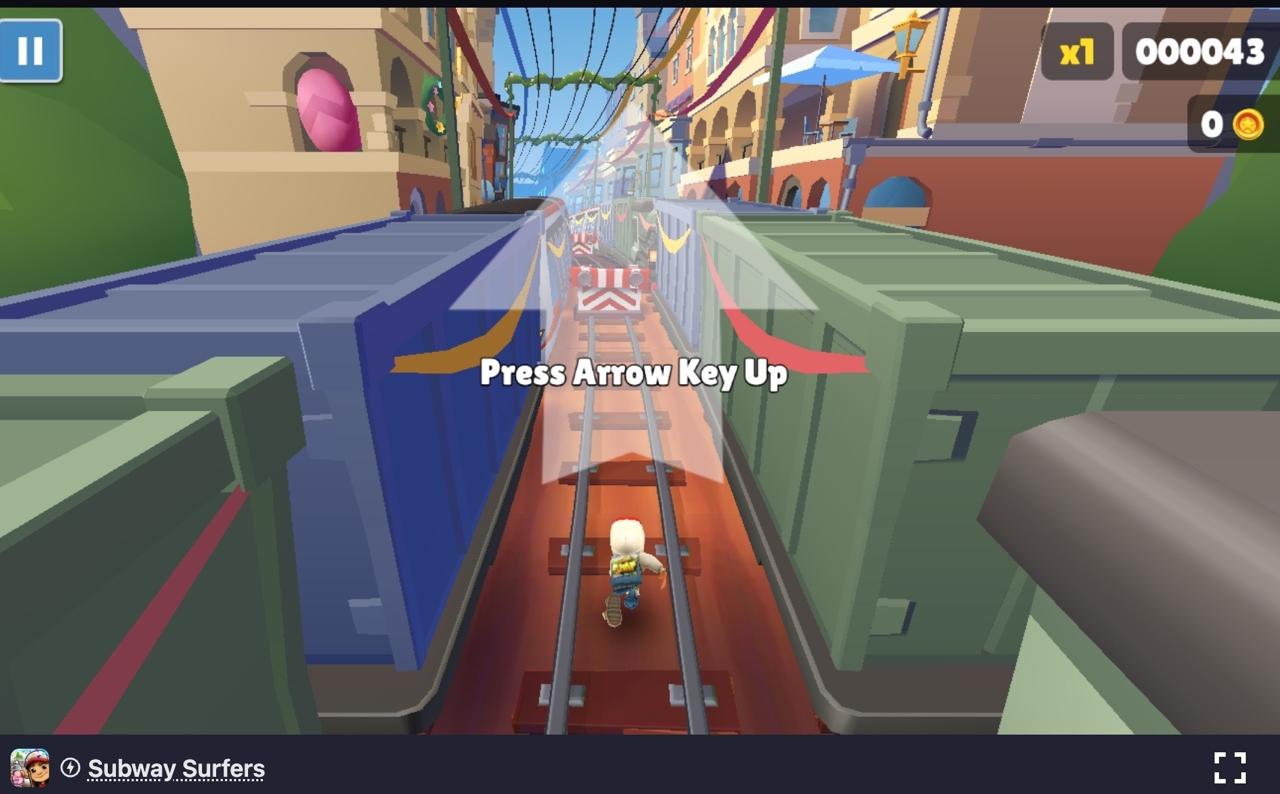
A screenshot from Subway Surfers game, one of prototypes for Chicken Subway slot
Comparative Analysis: Instant Game Formats
| Feature | Chicken Subway | Traditional Crash Games | Standard Slots |
|---|---|---|---|
| Player Input | Continuous (lane switching) | Single decision (when to cash out) | Minimal (bet and spin) |
| Round Duration | 15-60 seconds | 5-120 seconds | 3-8 seconds |
| Skill Component | High (reaction time + decisions) | Medium (timing only) | None (pure RNG) |
| Visual Engagement | Dynamic movement | Single growing multiplier | Spinning symbols |
| Session Intensity | Very high | Medium-high | Low-medium |
| Learning Curve | Moderate | Low | Very low |
The cash-out mechanic adds another layer. Players can collect their current multiplier at any moment, creating that familiar instant-game tension: push for a bigger win or secure what’s already on the table. It’s the Aviator formula applied to an action game structure.
Visual Design and Presentation
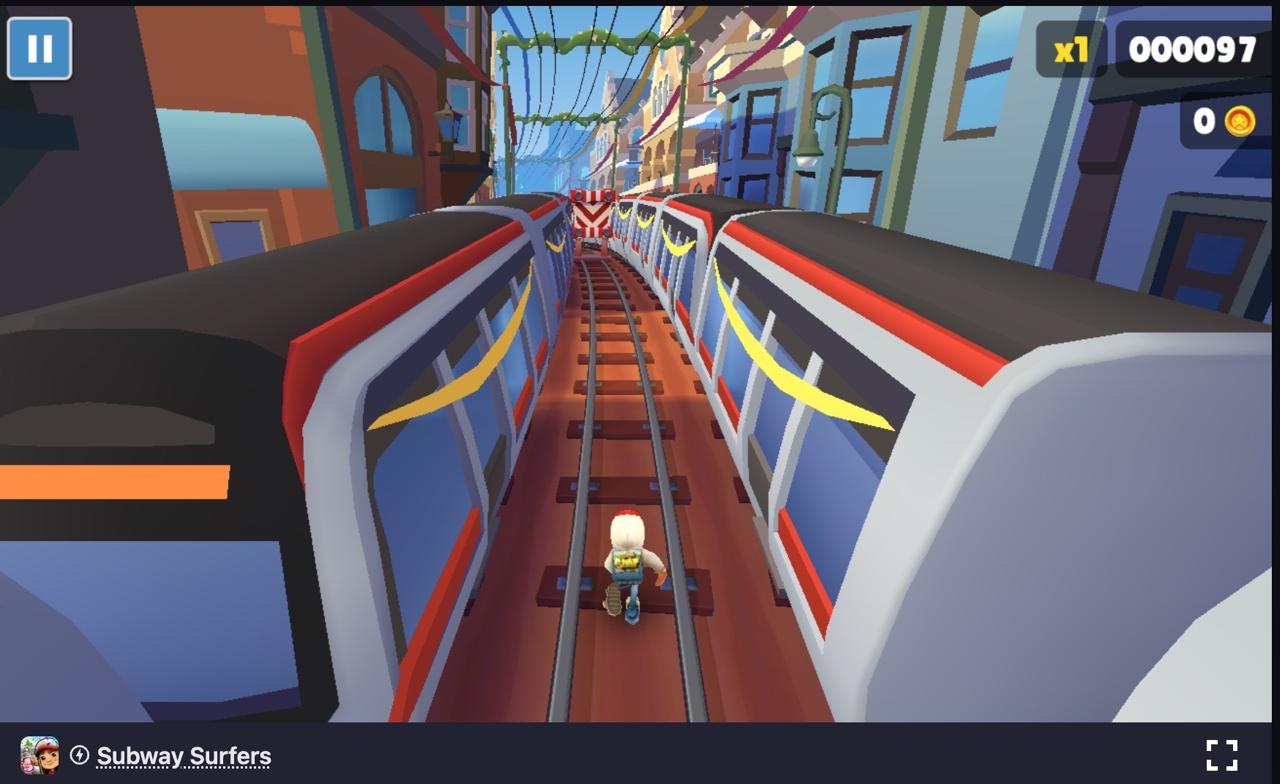
Expect vibrant, cartoonish graphics that lean into the mobile gaming aesthetic rather than traditional casino styling. Subway Surfers built its identity on colourful urban environments, graffiti-style art, and smooth animations. Chicken Subway appears to be taking that template — bright colours, clear visual hierarchy, readable at a glance even on smaller screens.
The character (presumably a chicken, given the name) likely maintains that slightly absurd, non-threatening vibe that made the original Crossy Road appealing across demographics. Nothing too realistic, nothing that screams “casino game” at first glance.
Expected Visual Elements
- Three distinct railway tracks with clear lane markers
- Urban or industrial backdrop with parallax scrolling
- Bright, saturated colour palette for instant recognition
- Smooth character animations for lane switching
- Clear visual telegraphing of upcoming obstacles
- Real-time multiplier display, likely positioned prominently at top of screen
- Simple, bold UI elements that don’t obscure gameplay
Technical Specifications
Loading speeds matter more here than in traditional slots. Any lag between rounds kills momentum entirely. 100HP is highlighting instant loading as a key feature, which suggests they’ve optimised asset sizes and server response times specifically for rapid session turnover.
The game engine needs to handle real-time collision detection, smooth animations at high frame rates, and maintain fairness through provably random obstacle generation. That’s technically more complex than spinning reels or plotting a crash curve. Whether they’ve nailed the balance between visual appeal and performance remains to be seen.
Technical Requirements for Success
- Frame rate consistency: minimum 60fps for responsive controls
- Server-client synchronisation: obstacle positions must match across all instances
- Input latency: under 50ms response time for lane switches
- Asset optimisation: total game package likely under 10MB for fast loading
- Mobile-first design: touch controls as primary input method
- Provably fair algorithm: obstacle generation must be verifiable
- Cross-platform compatibility: consistent experience across devices
Engagement Patterns
Traditional slots operate on a click-and-wait cycle: bet, spin, outcome, repeat. Crash games add tension through the climbing multiplier but remain passive experiences. Chicken Subway demands constant input. Every second the bet is active requires attention and decision-making.
This changes session dynamics completely. Where a slot player might run 100 spins in ten minutes with minimal cognitive engagement, someone playing Chicken Subway is actively involved for the entire duration. That intensity could drive shorter but more frequent sessions — death, restart, death, restart — mirroring the compulsion loop that made mobile endless runners addictive.
The psychological hooks are layered:
- Immediate feedback loop: action and consequence happen within seconds
- Near-miss engineering: barely avoiding obstacles creates excitement without payout
- Incremental skill improvement: players feel they’re getting better with practice
- Variable reward timing: unpredictable obstacle patterns prevent monotony
- Loss recovery temptation: quick rounds encourage immediate retry after losses
The Skill vs. Chance Balance
Here’s where things get complicated. Subway Surfers was pure skill — practice enough and you could run indefinitely. Casino games must maintain house edge through randomness. Chicken Subway sits somewhere between.
Obstacle patterns likely follow pseudo-random generation within defined parameters. Skilled players will perform better than complete novices, but the game still needs to ensure long-term operator profitability. That balance is harder to tune than pure RNG. Too much skill and sharp players can beat the house edge. Too much randomness and it feels rigged.
The three-track system helps here. Even if a player has excellent reflexes, they can’t see obstacles on all tracks simultaneously. Choosing which lane to occupy means accepting blind spots, keeping uncertainty in play regardless of skill level.
Balancing Factors
The game likely employs several mechanisms to maintain house edge while preserving the skill element:
- Obstacle density increases with distance travelled
- Reaction windows shrink as multiplier climbs
- Multi-track hazards force impossible choices at higher multipliers
- Speed acceleration makes later stages more demanding
- Random obstacle placement within probability ranges
Market Positioning
The instant gaming category is dominated by crash games and variants thereof. Aviator, JetX, Spaceman — they all follow the same basic structure with different skins. Chicken Subway breaks that mould while staying within the “fast, simple, exciting” framework operators want.
For demographics that grew up on mobile gaming, the transition from free-to-play endless runners to real-money versions requires less psychological adjustment than learning how paylines and scatter symbols work. The barrier to entry is lower, which matters when targeting markets where traditional casino culture is weak.
Target Demographics
- Age 21-35: mobile gaming natives comfortable with endless runner mechanics
- Casual players intimidated by traditional casino complexity
- Crypto casino users seeking novel experiences
- Markets with limited traditional casino presence
- Players who prefer active engagement over passive gambling
- Mobile-first users who rarely access desktop platforms
Operator Considerations
Round duration is critical. Too short and players feel they didn’t get value for their stake. Too long and turnover drops, hurting operator revenue. Subway Surfers runs could last minutes for skilled players. Chicken Subway likely caps rounds at 30-60 seconds maximum, keeping pace high without feeling rushed.
The creative potential for marketing is legitimate. Gameplay footage is actually gameplay, not misleading bonus compilations or manufactured big wins. Short clips of near-misses and dramatic cash-outs translate well to social platform advertising. The visual style is distinctive enough to be recognisable without infringing on existing IP.
Revenue Model Analysis
| Metric | Expected Range | Impact Factor |
|---|---|---|
| Average Round Duration | 20-45 seconds | Determines hourly turnover |
| Rounds per Hour | 80-180 | Higher than slots, lower than fastest crash games |
| Expected RTP | 95-97% | Must balance skill advantage |
| House Edge | 3-5% | Lower than slots due to skill component |
| Average Bet Size | Variable by market | Likely lower due to high frequency |
| Session Length | 5-15 minutes | Intensity may limit extended play |
RTP configuration will be interesting to see. Traditional slots typically sit between 94-96%. Crash games often run slightly higher. With the skill component in play, 100HP needs to find a sweet spot where good players feel rewarded but the house edge remains stable across the player base.
Potential Issues
The skill element introduces variance that operators typically avoid. If certain players consistently outperform the expected RTP through superior reaction times, it creates profitability problems. Conversely, if obstacles feel unfair or unavoidable, player complaints about rigging will surface immediately.
Session intensity could lead to faster burnout compared to passive slot play. Endless runners work as free games because there’s no financial loss from failure. When real money is attached, repeated quick deaths might frustrate rather than motivate.
The three-track visibility issue is another factor. Players need to feel they had a fair chance to react to obstacles. If hazards appear too suddenly or the track switching animation takes too long, the gameplay feels cheap rather than challenging.
Risk Factors for Launch
- Player skill distribution wider than anticipated
- Optimal bet sizing unclear to new players
- Mobile performance issues on older devices
- Obstacle balancing requires extensive post-launch tuning
- Community perception of fairness in obstacle generation
- Competition from established instant games with loyal audiences
What Success Looks Like
If Chicken Subway hits, expect a wave of imitators. The format is simple enough to clone but tricky enough to execute well that most copycats will miss the mark. The key differentiators will be animation smoothness, obstacle balancing, and whether the skill element feels meaningful without being exploitable.
For the broader instant gaming market, this represents a potential evolution beyond the crash game formula that’s dominated for years. Whether players want more active engagement or prefer the passive tension of watching a multiplier climb is an open question.
The fundamentals are sound: proven gameplay mechanics, clear visual identity, technical optimisation for mobile, and a format that photographs well for advertising. Execution will determine everything. Casino games live or die based on how the first thousand players feel in the first five minutes, and there’s no way to predict that from a press release.
Launch will tell the real story.